Thursday, 16 April 2026


SAFARI WORLD
Safari World is a drive-in zoological park divided into two parts. The first part is Safari Park, an open zoo with wild animals. The second part is Marine Park where there are a variety of marine animals and shows.
Find the cheapest ticket here.

dream worldDREAM WORLD

Best kid’s amusement park in Bangkok.

bangkok dinner cruise

DINNER CRUISES

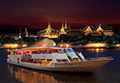
Embarking on a stylish dinner cruise down the Chao Phraya river.

City TourDoi Suthep RouteMae Rim - Samoeng Route • Chiang Mai - Chom Thong - Hot Route (to Doi Inthanon National Park) • Bo Sang - San Kamphaeng RouteMae Taeng - Chiang Dao - Fang Route


Photos : www.facebook.com/pg/chiangmainightsafarifanclub


Location : A. Hang Dong, Chiang Mai

Chiang Mai Night Safari is the world’s largest night safari and one of the world’s most modern natural attractions. The park combines the beauty of nature with human imagination to create a unique experience that is sure to please all ages.

Night safari tram ride is the highlight of Chiang Mai Night Safari. The tram ride is available daily from 07.00 p.m. until 10.00 p.m. with every 15 minutes departure. Night safari tram ride will take 30 minutes in each north and south zone which the passengers have to get off at the south zone and get on again for the north zone.

South Zone: Wildlife include Serows, Gorals, Gaurs, Red Kangaroos, White Rhinos, Striped Hyenas, Cheetahs, Wildebeests, Giraffes, Wild Yaks and Barasinghas.

North Zone: Wildlife include Lions, Manned Wolves, Black Bears, Jackals, Pumas, Hyenas, Crocodiles, Vultures, Malayan Sun Bears and Wolves.

Besides the night safari zones, Chiang Mai Night Safari also features many other attractions, e.g. Digital Zoo, Tiger World displaying 40 tigers from 10 species including the white tigers, Walking Zone, Elephant Riding, etc.

Open : Daily from 11.00 – 23.00 hours

For taxi : เชียงใหม่ไนท์ซาฟารี

You can get the cheapest ticket to Chiang Mai Night Safari. Please check the program below.

City TourDoi Suthep RouteMae Rim - Samoeng Route • Chiang Mai - Chom Thong - Hot Route (to Doi Inthanon National Park) • Bo Sang - San Kamphaeng RouteMae Taeng - Chiang Dao - Fang Route


Eventful Temple Boasting Exquisite Lanna Works of Art

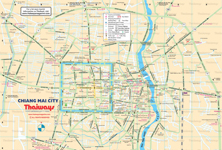
(4 km. on Super Highway / see Map of Chiang Mai City)

Wat (temple) Chet Yot or Wat Photharam Mahavihara, a sacred temple of Chiang Mai, is situated on Super Highway (Chiang Mai-Lampang), 4 km from Doi Suthep. It is held prestigious because the eighth revision of the Buddhist Tripitaka took place here in the reign of King Tilokkarat (1442-1487) of the Lanna Kingdom. The king himself was the chairman of that event. In addition to its significance in history, its works of art are among the finest of the Lanna school. To make your visit to the temple more enjoyable, Thaiways presents to you the temple's background and some interesting aspects.


Background

In 1455, King Tilokkarat ordered to construct a temple to be the abode of a revered Buddhist monk named Uttama Panya Thera.

At the first stage of the temple establishment, a Bodhi tree, which is said to be a sapling of the Original Sri Maha Bodhi in Sri Lanka, was planted here to commemorate the Lord Buddha. Walking around it, you will see a lot of wood posts leaning against the Bodhi tree as if to support it. This is a northern tradition done as an auspicious start for the Thai New Year (Songkran Festival, 13-15 April). Besides, as the Bodhi tree is a token of Buddhism, the practice signifies that the lay people unite to support Buddhism. This is believed to be a grand merit.

Replicas of Satta Mahasathan* were built together with the temple, also as religious memorials. King Tilokkarat called the temple Photharam Mahavihara. Photha means a Bodhi tree and mahavihara means a huge monastic hall. However, the locals prefer to call it Wat Chet Yot as the main stupa has seven spires.

When King Tilokkarat died in 1487, King Yot Chiang Rai, his grandson, built a stupa to house his relics. In the reign of King Muang Kaeo (1495-1525), the temple was renovated and an ordination hall was set up.

Afterwards, Wat Chet Yot was deserted for some time. It was not until the early Rattanakosin Period (1782-1851) that King Kawila of Chiang Mai (1796) restored towns and temples including Wat Chet Yot.

wat-chet-yot-by-tw-02
wat-chet-yot-by-tw-03

Constructions in the Compound

  1. The Seven-spire Stupa, which is similar to the Mahabodhi Temple or Buddha Gaya, India, shows delicate craftsmanship of its stuccoed bas reliefs in forms of sitting and standing angels. Because of the distinctive style, they became a prototype for works of art of successive ages. You will notice that the attire of each angel is different from that of the rest. Other motifs like flowers and creepers reflect the Chinese influence which was first introduced to Thailand in the form of ceramics around 1260-1368.
  2. The old ordination hall is in the northeast of the present ordination hall. It was built in 1502 under the command of King Muang Kaeo of the Mangrai Dynasty.
  3. The stupa housing King Tilokkarat's relics is a large castle-shaped chedi. Each of the four sides of its base has an arch in which a Buddha image was once housed.

*Satta Mahasathan refers to seven sites where the Buddha passed seven successive weeks in meditation after gaining enlightenment. They are: 1.Bodhi Tree 2. Animesha Chedi 3. Ratana Chankramana Chedi 4. Ratanaghara Chedi 5. Ajapala Nigrodha Tree 6. Muchalinda Lake and 7. Raja-yatana Tree. The seven sites are located in the precinct of Mahabodhi Temple (Buddha Gaya), India. At Wat Chet Yot, at present, only three are left, viz. Animesha Chedi, Ratanaghara Chedi and Muchalinda Lake.

For more information, please contact TAT Northern Office Region 1, tel: +66 (0)5324 8604, +66 (0) 5324 8607.

Special thanks to Tourism Authority of Thailand (TAT) Northern Office Region 1 for arranging an impressive press tour of Chiang Mai and to Mag Media Co., Ltd. and Forty-Five Organizer & Media Co., Ltd. for facilitating the photographing and giving us useful information.

For taxi : วัดเจ็ดยอด

wat-lok-moli-by-tw-01

Another visit-worthy temple of Chiang Mai

When in Chiang Mai, the city of old culture and sweet-mannered people, the sites where you can linger all day to admire the city's magical charm are temples dotting the city in abundance. Apart from Wat Phra Sing which is a well-known beautiful Buddhist temple where Phra Phuttha Sihing, a most revered Buddha image of the north is enshrined, Wat Lok Moli appears to be another interesting and visit-worthy temple.

Background

The name of Wat Lok Moli was mentioned in the Chronicle of the Lanna Kingdom when King Chai Racha of Ayutthaya (1534-1546) marched his troops to attack the Lanna Kingdom.

Wat Lok Moli is located near Chang Phuak Gate. Its front is adjacent to the road around the city moat. If you drive round the moat, you will notice its delicate patterned arch and its teak Lanna-style vihara.

Wat Lok Moli is an ancient temple of Chiang Mai but its establishing year is unknown. The name Wat Lok Moli was found in the "Legend of Wat Phrathat Doi Suthep". It mentioned that in A.D. 1367 King Kuena, the sixth Lanna King of the Mangrai Dynasty who had a strong faith in Buddhism dispatched his envoys to invite Phra Maha Thera, a revered Buddhist monk of Martaban* to propagate Buddhism in the Lanna Kingdom.

*Martaban is an ancient town believed to have been founded in A.D. 573 by the first king of Pegu. At present it is a small town in Thaton District of Lower Myanmar.

Unfortunately, the monk was too old to travel. So, Phra Ananda Thera and another ten monks were sent as delegates to carry on this mission. When in the kingdom, the monk group stayed at Wat Lok Moli. Later, in 1527, King Ketklao transferred the area of Ban Hua Wiang Village to be part of the precinct of Wat Lok Moli. In 1528, he ordered the grand pagoda and the vihara to be established. When the king was assassinated in 1545, the civil servants agreed to house his relics in a pagoda at Wat Lok Moli.

After that, his daughter, Queen Chira Prapha succeeded him. Some legends assume that she was actually the Queen of King Ketklao, not his daughter. During her reign, Chiang Mai became weak in military strength, so, King Chai Racha of Ayutthaya led his army to attack Chiang Mai. Thanks to the Queen's wits, Chiang Mai maintained its sovereignty. Afterwards, the queen officially invited King Chai Racha to make merit at Wat Lok Moli. And the king gave the queen an amount of money to renovate the pagoda housing the relics of the late King Ketklao.

After that, Chiang Mai had been Burma's vassal state for about 200 years. During the Burmese rule, many temples were burnt down except Wat Lok Moli. This was because the Burmese king ruling Chiang Mai at that time held Wat Lok Moli as a prestigious temple.

Interesting Constructions

The Pagoda

This castle-style pagoda was constructed in 1528 in the reign of King Ketklao. It was later renovated and modified several times, adding to the height of the pagoda. Inside the pagoda are King Ketklao's relics.

The Vihara

The vihara of Wat Lok Moli shows typical Lanna architectural style with awesomely beautiful naga* stuccoed figures.

* a mythical serpent-like creature

Special thanks to Tourism Authority of Thailand (TAT) Northern Office Region 1 for arranging an impressive press tour to Chiang Mai and to Mag Media Co.,Ltd and Forty-Five Organizer & Media Co.,Ltd. for facilitating the photographing and giving us useful information.

For taxi : วัดโลกโมฬี

trekking-by-123-tw-01

Thailand is a home of the following six major hilltribes: Meo or Hmong, Yao or Mien, Karen or Kariang, Akha or Iko, Lahu or Musoe and Lisu or Liso.

These hilltribes live mainly on the mountains in Chiang Mai, Chiang Rai and Mae Hong Son provinces in northern Thailand. For details about the history, culture and lifestyles of the hilltribes, tourists are recommended to visit the Tribal Research Institute in Chiang Mai University. Tourists are strongly advised against exploring the hilltribe areas by themselves, as the rugged terrain and the vast size of the mountainous regions prevent the government authorities from closely controlling the areas for security purposes.

Generally, jungle treks last from two to seven days and consist of two or three modes of transportation, they are travel on foot or by jeep, rafting, elephant riding and horse riding. The best time for trekking is November to February when the weather is refreshing with little or no rain. Since these hilltribe settlements are a major tourist attraction of the North, guidelines on trekking in these areas are given below for the safety and convenience of all visitors:

  • In Chiang Mai and Chiang Rai, there are many private companies specializing in trekking tours. Use the services of only those tour operators or guides licensed and registered legally. Make sure that they have properly filed their names and registered with the Tourism Authority of Thailand and the Tourist Police to prevent any possible problems which might arise. See advertisement in this website or Thaiways publications or ask for a list of licensed agencies from the TAT office.
  • The best recommendations about trekking companies can be obtained from those who have made such a trek before. They are more than willing to express their satisfaction or dissatisfaction according to the services they have received. You may also inquire of the Tourist Police about reports of any problems certain companies may have encountered.
  • Each company has its own itineraries and destinations. The major areas visited by trekking groups are Chiang Dao, Wiang Papao, Phrao, Ngao, Mae Chan, Fang, Chiang Rai and Mae Hong Son.
  • Unlawful drugs are strictly prohibited. Do not at any cost get involved with demonstration on an invitation to sample narcotics or any other types of drugs while on a trek. You can find out from the Tourist Police which areas have security problems. With this information in hand, you will know what areas you should avoid.
  • Tourists should have a thorough understanding of the services the trekking company will provide, such as the number of days of trek, area to visit, meals to be provided, etc. Should the trekking company or guesthouse offer to keep your valuables, traveller's checks, passport, etc., you should prepare a complete listing of the valuables and ask for a receipt for such.
  • Make a survey of companies that do include the area you want to visit in their itineraries. Since rates are varied due to several conditions, e.g. destination, duration and transportation modes, it is worthwhile to shop around.
  • Under no circumstances should tourists go trekking by themselves without a registered guide, since you are not familiar with the terrain of the mountainous areas of northern Thailand. Besides, some groups of hilltribes do not reside in a specific area but move from place to place frequently, you do not know which tribal villages welcome strangers and provide sleeping accommodations.
  • Show respect for religious symbols and rituals. And always ask permission before taking photos of tribespeople or their houses.
  • Use your common sense; don't take any unnecessary risk thereby spoiling your holiday.
  • Help preserve the jungle's natural state by not harming wildlife or causing unintentionally sparks which might lead to forest fire.

THE LANDMARKS OF BANGKOK TOUR

MORE

The Landmarks of Bangkok Tour

The program including 4 temples and 1 palace: Wat Arun (The Temple of Dawn), Wat Benchamabopith (The Marble Temple), Wat Trimitr (The Golden Buddha), Wat Pho (The Temple of Reclining Buddha), The Grand Palace & The Temple of the Emerald Buddha (Wat Pra Kaew).
 

DAMNOEN SADUAK FLOATING MARKET

MORE
damnoen saduak floating market

Damnoen Saduak Floating Market Tour

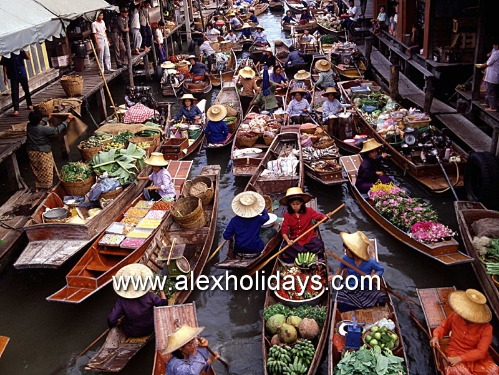
This authentic floating market is one of the most photographed places. It is located in Ratchaburi, about 100 km from Bangkok. Take a long-tail boat to the Floating Market where you will see the lifestyle of Thai people along the canal. Many vendors floating in their small rowing boats selling local food.

 

logoAlex Holiday is a Bangkok-based travel agent, operating tour services and providing hotel reservations all over Thailand. We specialize in cultural, trekking, adventure and golf tours as well as other tailor-made tour packages. We can organize all kinds of travel for you. More details...


PATTAYA

MORE

Pattaya Beach

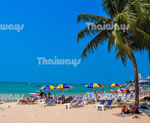
Pattaya Beach is divided into the north, central and south zones. The beach offers excellent facilities for watersports enthusiasts of all kinds.


PHUKET

MORE

Patong Beach

Patong is the most famous beach in Phuket. With its wide variety of activities and nightlife, it is an ideal place to relax, party and play.


SAMUI

MORE

Chaweng Beach

This 7-km beach is the longest and the most popular beach on the east coast of Ko Samui. It has clean white sand and clear blue water.


HUA HIN

MORE

Hua Hin Beach

A popular beach destination about 3-hour drive from Bangkok. Its long sandy beach with a relaxed atmosphere is great for family holiday.